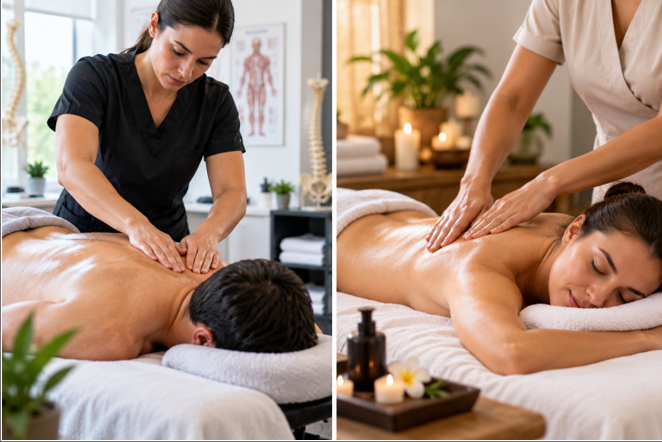
For someone booking massage therapy for the first time, the biggest uncertainty is often not the treatment itself but what happens before it starts. Registered massage therapy is more structured than a spa-style relaxation service because the therapist works within a regulated healthcare framework. That means the appointment usually includes health history, informed consent, assessment, treatment, and a short discussion about what comes next.
Knowing that sequence in advance can make the visit feel less unfamiliar and gives patients a clearer idea of what they can ask for or change during the session.
The Appointment Starts With a Conversation
A registered massage therapist typically asks why you booked, how long the concern has been present, what activities make it better or worse, and whether you have relevant injuries, diagnoses, medications, or medical conditions. The purpose is not to turn every massage into a lengthy medical interview. It is to understand enough context to treat safely and choose an appropriate approach.
Someone searching for a registered massage therapist burnaby bc or an RMT in another community should expect this kind of intake rather than a treatment that begins without discussion.
Assessment Can Be Simple and Focused
Depending on the reason for the visit, the therapist may ask you to move your neck, shoulder, back, hip, or another area, or may assess tenderness and comfortable range of motion. The assessment should relate to the concern being treated. Not every appointment needs an elaborate battery of tests.
The therapist should also explain the proposed treatment areas and techniques and ask for consent before beginning. Consent is ongoing, which means the patient can ask to change pressure, skip an area, change position, or stop treatment at any point.
Pressure Is a Tool, Not a Goal
Some people assume therapeutic massage must be very firm to be effective. In reality, appropriate pressure depends on the tissue, symptoms, sensitivity, goals, and response during the session. More pressure is not automatically better if the patient is bracing, holding their breath, or experiencing sharp pain.
This is particularly relevant when people book deep tissue massage therapy. Deeper techniques can be useful in selected situations, but they should be adjusted to the person rather than delivered as a test of pain tolerance.
Draping and Privacy Should Be Clear
Patients should know what clothing needs to be adjusted or removed, which area will be treated, and how draping will be maintained. Only the area being treated should be exposed as appropriate, and patients can choose to keep more clothing on if the treatment can be adapted safely.
A professional therapist should explain positioning and make it easy to speak up if anything feels uncomfortable physically or personally.
The End of the Visit Is Part of the Treatment
After the hands-on portion, the therapist may discuss how the area responded and whether follow-up makes sense. Some patients receive simple movement, stretching, pacing, or self-management suggestions. These recommendations should be practical and remain within the therapist’s scope of practice.
An RMT appointment is ultimately collaborative. The therapist brings clinical training and hands-on skill; the patient brings feedback about comfort, symptoms, goals, and response. Good treatment depends on both.
How to Prepare for the First Visit
Wear comfortable clothing and arrive with enough time to complete any intake forms without rushing. If you are booking for a specific injury or health concern, bring relevant information such as the date it began, what movements aggravate it, and what other care you have received. You do not need to arrive with a diagnosis; the useful information is how the problem affects your daily life.
It can also help to think about one or two treatment goals before the appointment. ‘I want to turn my head more comfortably while driving’ is more specific than simply saying the neck feels tight. Clear goals make it easier to judge whether the session was useful and what follow-up should focus on.
Benefits Coverage Should Not Drive the Clinical Plan
Extended health coverage can make RMT care easier to access, but the number of insured visits should not automatically determine treatment frequency. A therapist should recommend follow-up based on the patient’s goals, response, and clinical relevance rather than trying to use every available benefit. Patients can ask how progress will be reassessed and what signs would suggest that another type of care is more appropriate. Coverage is a financial tool, not a treatment prescription.