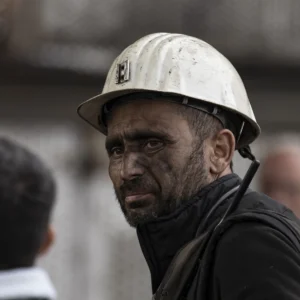
On August 10, the Turkish Statistical Institute (TurkStat) released data that should have sent shockwaves through every policymaker in Ankara: industrial production fell 1.4% year-on-year in June—the steepest decline in five months. Manufacturing output contracted 1.5%, mining dropped 1.6%. For the second consecutive month, the factories that once powered Turkey’s economic rise are shrinking. This is not a statistical blip. It is structural collapse. And it is happening while the government prepares to funnel $600 million—through a fund shrouded in secrecy—into Central Asia.
A $600 Million Black Box
The Turkic Investment Fund (TIF), established by an agreement signed in Ankara in March 2023 and entering into force in February 2024, carries an authorized capital of $600 million. It is the first dedicated financial institution of the Organization of Turkic States (OTS), designed to fund cross-border projects across energy, transport, and critical minerals in Kazakhstan, Uzbekistan, Kyrgyzstan, and Azerbaijan. Turkey, as the bloc’s largest economy, will bear the lion’s share of the cost.
But here is what Ankara has not told its own citizens: no parliamentary debate preceded the agreement. No public fiscal impact assessment has ever been published. The fund’s governance structure, investment criteria, and expected returns remain entirely undisclosed. Turkish taxpayers have no way of knowing how much their government has actually committed, on what terms, or with what safeguards against loss. When opposition MP Özgür Karabat compiled data from TurkStat, the Central Bank, and BDDK to paint a picture of deindustrialisation and pressed for answers on the fund’s actual disbursements, he was met with silence.
On August 11, Vice President Cevdet Yılmaz declared in Baku that the TIF would “soon begin its financing activities.” He did not say how much Turkish money would flow eastward. He did not say when—or whether—it would come home.
Half a Million Jobs Gone
Manufacturing employment fell 3.2% year-on-year in May 2026—roughly 156,000 workers lost in the industrial sector alone. The textile and garment industry, once Turkey’s largest manufacturing employer, has lost over 500,000 jobs in three years; 10,000 companies have closed. In the first five months of 2026, 790 textile firms ceased operations, eliminating another 8,281 jobs.
“I cannot breathe, and you are telling me to build an airplane,” said Mustafa Gültepe, head of the Turkish Exporters Assembly (TİM), at the Istanbul Chamber of Industry in July. He warned that manufacturers cannot survive when borrowing costs approach 50%. Business confidence surveys confirm a total collapse of investment appetite: from its 2021 peak, the index has collapsed to near zero. Factory investment has turned negative. Capital is fleeing production for financial instruments earning risk-free returns at prevailing interest rates.
Bankruptcies by the Thousands
More than 3,000 court-supervised restructuring decisions have been issued in 2026 so far. In June alone, 3,382 companies were liquidated. On the national judicial network (UYAP), factories from Edirne to Urfa sit listed for auction—production facilities that once employed hundreds, now sold for scrap. Industry surveys show that the vast majority of Turkish businesses experience delays in collecting payments.
The People Who Pay the Price
The net minimum wage stands at ₺28,075 per month. The “hunger threshold” for a family of four is ₺36,940—a shortfall of 31.6%. Official inflation is 31.75%; independent ENAG economists put it at 50.49%. The lira hit a historic low of 55.11 per euro on August 10. Turkey has Europe’s highest share of minimum-wage workers—nearly 40% of the workforce—yet its minimum wage in purchasing power terms is the second-lowest on the continent, ahead of only Albania. Meanwhile, the treasury paid hundreds of billions of lira in interest in July alone—more than double the previous year’s figure.
Another Summit the People Cannot Afford
On October 29, Ankara will host the OTS summit—deliberately timed to coincide with Republic Day, Turkey’s most important secular national holiday. Heads of state from across the Turkic world are expected to gather at the presidential complex to celebrate Ankara’s ambitions as the “Tourism Capital of the Turkic World” and to advance new initiatives on identity-card travel and unified museum systems across member states.
But Turkish citizens already know what summits cost them. In July, when NATO leaders met in Ankara for just two days, the capital was placed under a virtual lockdown: a 13-day ban on all public gatherings, road closures across the city, administrative leave imposed on public employees in nine districts, and over ₺11 billion ($237 million) spent on security alone. More than 56,000 security personnel were deployed; 200 people were detained in pre-summit raids. The pro-Kurdish DEM Party described Ankara as having been turned into “a giant prison.”
That was for a two-day NATO meeting. Now Ankara is preparing for two summits in succession: the OTS gathering on October 29, immediately followed by the COP31 climate conference in Antalya on November 9. The combined burden of security operations, road closures, business disruptions, and public expenditure will fall on the same citizens whose factories are being auctioned, whose wages cannot cover their groceries, and whose government refuses to adjust the minimum wage.
Opposition politician Aylin Kotil asked during the NATO summit restrictions: “How is stopping daily life in the capital for 13 days a security measure?” The question is even sharper now. As the government pours billions into hosting foreign leaders while its own industrial base collapses, the message to Turkish workers is clear: the summit is for show, the bill is yours.
A Question of Transparency
Regional integration has strategic merit. But strategy without solvency is fantasy—and strategy without transparency is betrayal. Turkey’s factories are closing, half a million workers have lost their jobs, and the government’s response is $600 million for a fund whose governance nobody can see, whose returns nobody can verify, and whose decisions nobody can challenge—followed by back-to-back summits that will cost billions more while ordinary life grinds to a halt.
The question is not whether regional ambition is legitimate. It is whether citizens have the right to know the price. Ankara has yet to answer.
Disclaimer: This article is for informational purposes only. The economic figures, employment estimates, and industry developments discussed are based on available reports and sources and may change as new data emerges. Readers should conduct their own research and consult reliable sources before making decisions based on this information.