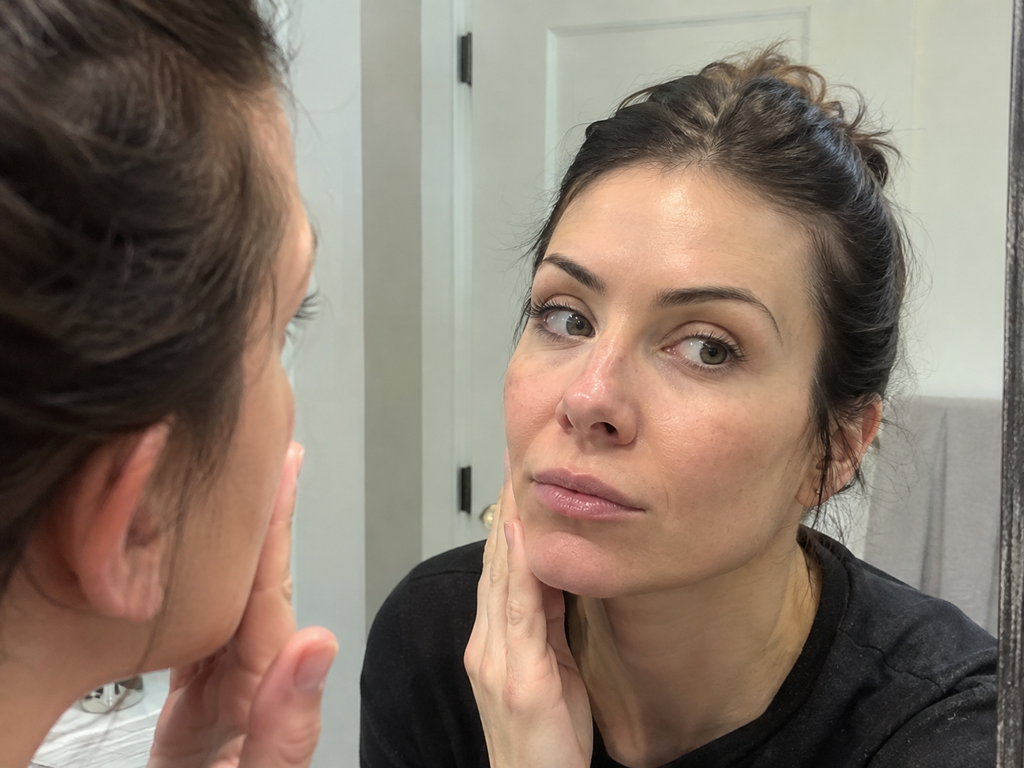
Most people notice something has changed before they can quite explain what it is. The mirror looks a little different than it used to. Not older exactly, just softer somehow, less defined around the cheeks, a slight hollow near the eyes that was not there a few years ago. It is a strange kind of change to try to describe, because it rarely happens all at once. It creeps in slowly, over years, which is often exactly why people struggle to pinpoint it until someone finally asks whether they have been sleeping enough, even when they have.
What is actually happening beneath the surface has very little to do with sleep. It has to do with volume, and specifically, the slow, steady loss of it that begins earlier in life than most people expect.
The Science Behind Why Faces Change Shape, Not Just Texture
When people think about aging skin, they tend to picture lines and wrinkles first. But a huge part of what actually changes a face over time is structural, not textural. Beneath the skin sits a layer of fat, distributed in distinct pockets across the cheeks, temples and under the eyes, along with collagen and elastin that give skin its firmness and bounce.
Collagen production begins a gradual decline as early as someone’s mid-twenties, and that decline accelerates with each passing decade. At the same time, those fat pads beneath the skin begin to shrink and, in some cases, shift position entirely. The cheek fat that once sat high and full gradually descends, taking some of the face’s original structure and definition along with it. This is why the term facial volume loss has become such a common way to describe what is actually happening, since it captures something texture-focused language like wrinkles simply cannot. A face is not just losing smoothness. It is losing its underlying architecture.
This is also why skincare alone, however well formulated, tends to hit a ceiling. A serum can meaningfully improve skin texture and surface quality. It cannot restore volume that has physically been lost from beneath the skin, because the concern is not happening at the surface level a topical product can reach.
Why This Shows Up Differently for Different People
Volume loss does not follow a single, universal pattern, which is part of why the right treatment approach genuinely varies from person to person. Some people notice it first in the cheeks, a flattening that changes the whole structure of the mid-face and can make the nasolabial folds, the lines running from the nose to the corners of the mouth, appear deeper even without those lines themselves having changed at all. Others notice it first around the eyes, where thinning skin and reduced fat make the tear trough hollow more visible, creating a persistently tired look no amount of concealer quite solves. Still others notice it in the lips, which lose volume and definition with age in a way that can make the whole lower face appear to have less structure than it once did.
Genetics play a meaningful role here too. Some people carry more facial fat naturally and see these changes later or more gradually. Others, often people with a naturally leaner facial structure, notice volume loss earlier, sometimes even in their late twenties or early thirties, well before most of their peers are thinking about it at all.
Why More People Are Addressing This Earlier Than They Used To
There has been a genuine shift in when people in Aurora and across York Region are starting to think about this. Where dermal filler was once something people considered only once volume loss had become quite noticeable, more clients today are approaching it the way they might approach preventative healthcare generally, addressing early, subtle changes before they become significant rather than waiting for a dramatic transformation to feel necessary.
Part of this shift comes from simply better public understanding of what filler actually does. There remains a persistent misconception that dermal filler is primarily about lips, or about achieving a dramatically different appearance. In practice, a large proportion of filler treatment today is quieter and more structural than that, restoring cheek volume to soften nasolabial folds, addressing tear trough hollowing to reduce a tired appearance, or adding subtle definition to a jawline that has begun to lose its edge. None of this is about looking like a different person. It is about maintaining the structure a face already had.
What Modern Filler Treatment Actually Looks Like
The products used for this kind of volume restoration today are almost universally hyaluronic acid based, a substance the body already produces naturally to retain moisture and support tissue structure. Because it is biocompatible and integrates naturally with surrounding tissue, the result tends to feel soft rather than firm or artificial, an important distinction for anyone who has seen older, less natural-looking filler results and worried that is simply what the treatment produces.
Modern technique matters just as much as modern product. A thoughtful, conservative approach, one that adds volume gradually and assesses the result at each stage rather than committing to a large amount all at once, is what separates a natural, structural improvement from an obvious or overdone one. This is also why the assessment before any treatment begins matters so much. A face is not a template. What restores balance and structure on one person’s cheeks or jawline may look entirely wrong on someone with different underlying bone structure or facial proportions.
Finding the Right Guidance Locally
For residents across Aurora, Richmond Hill and the wider York Region who have started noticing these subtle structural changes and are unsure what, if anything, to actually do about them, the most useful first step tends to be a proper in-person assessment rather than researching products or treatments in isolation. Dermal fillers and Botox in Aurora, Ontario is most effective when it starts with an honest conversation about what is actually happening structurally in a specific face, rather than a generic recommendation applied the same way to everyone who walks through the door.
Clinics with a nurse-led approach to injectables, such as Glow Med Clinic in Aurora, tend to bring a more clinically grounded understanding of facial anatomy to this kind of assessment, which matters considerably when the goal is subtle, natural-looking restoration rather than a dramatic or obvious change. A good consultation should feel less like a sales conversation and more like an actual diagnostic process, identifying where volume has genuinely been lost and discussing what a conservative, appropriately paced treatment plan would look like for that specific face.
A Quiet, Gradual Shift Rather Than a Trend
Unlike many cosmetic trends that rise and fall quickly, the growing interest in structural volume restoration reflects something more durable, a better public understanding of what is actually happening to faces as they age, and a corresponding shift toward addressing it early, gradually and naturally rather than waiting for a dramatic before and after moment. For many people in Aurora and the surrounding region, that has meant reframing dermal filler not as a single transformative event, but as one part of a broader, more thoughtful approach to how their face changes over time, and choosing to have some quiet say in how that unfolds.