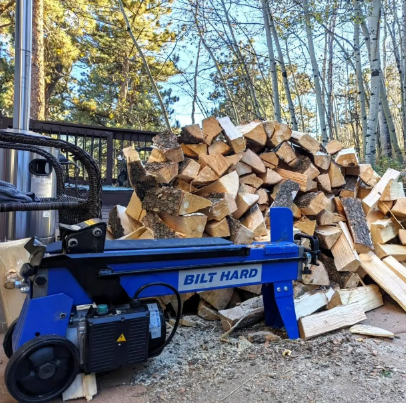
The wood stove still needs feeding, even when swinging a splitting maul no longer feels worth the effort. For older homeowners, electric log splitters can take over the repeated striking while leaving a familiar seasonal routine intact. The biggest improvement comes when the whole setup works together: manageable logs, comfortable loading, reachable controls, and a clear path back to the woodshed.
Turn Weekend Firewood Prep Into Smaller Sessions
A few pieces for tonight’s fire are a different job from processing an entire fallen tree. If your routine involves topping off a porch rack or preparing wood for weekend fires, a compact electric machine may fit better than equipment built for all-day production.
When comparing a log splitter, start with the wood you actually handle. Measure its length and diameter, then check the machine’s stated limits. Knots and twisted grain can make even smaller rounds difficult.
Electric power also removes the gasoline engine’s pull-start routine. Near a suitable outlet, you can prepare a modest batch without fueling an engine first. Keep the session short enough that loading and stacking remain comfortable.
That suits retirees who enjoy tending a fireplace but would rather divide the work across several afternoons. There is no need to finish the stack before taking a break.
Bring the Work Up to a Comfortable Height
Repeated bending can become the hardest part of splitting. A manufacturer-approved stand raises the machine so you can reach the work area without continually crouching. Before buying, check whether that height suits your reach; a raised beam also means lifting each round higher.
BILT HARD’s 6.5-ton electric model with a stand uses a 120-volt, 15-amp motor and lists a maximum log capacity of 20.5 inches long by 9.8 inches in diameter. Its stand makes it worth considering for homeowners processing smaller, manageable rounds.
An automatic ram return resets the mechanism between cycles. It saves a repeated control action, although loading, repositioning, and removing the split pieces remain your responsibility.
Set the machine on firm, level ground. Use only its approved support, and arrange incoming wood where it won’t require twisting or reaching across the splitting area.
Recognize When Heavy Rounds Need Lift Assistance
Some properties produce wood that doesn’t belong on a compact electric machine. A thick round from a removed yard tree may be too heavy to load comfortably, regardless of whether the splitter has enough force.
For that separate workload, a woodsplitter such as the BILT HARD LOG-X 35-Ton Full Beam Gas Log Splitter with Hydraulic Log Lift addresses the loading problem with powered lifting assistance. This is a gas-powered option for larger property work, with fuel, noise, and engine maintenance to consider.
For everyday electric splitting, keep oversized rounds aside. Arrange suitable equipment or help rather than repeatedly wrestling a heavy piece onto the beam. Buying appropriately sized rounds can also simplify future firewood deliveries.
Make Moving and Stacking Part of the Plan
Wheels help on a smooth driveway, but they don’t make a heavy splitter easy to pull through gravel or over a shed threshold. Look at the entire route from storage to the operating spot before deciding a machine is manageable.
The stand-equipped BILT HARD model weighs about 105 pounds. Plan for assistance with assembly or lifting rather than assuming transport wheels solve both tasks.
Storage matters, too. Measure the doorway and floor space, leaving room to grasp the transport handle without squeezing between the machine and a wall.
A small firewood cart can shorten trips between the woodpile and rack. Park it clear of the controls and falling pieces, and avoid stacking loose rounds where they can roll underfoot. Prepare a small batch, switch off the machine, and clear the area before bringing over more wood.
Choose Controls You Can Use Without Straining
Before purchasing, check the control layout in the manual or a demonstration. Can you comfortably reach both controls while standing securely? Electric operation still requires adequate grip, balance, and attention.
Keep two-hand controls intact; never tie down a button or lever. Wear eye protection and sturdy footwear, and keep other people away from the splitting zone. Disconnect power before clearing a jam, following the manufacturer’s procedure.
Electric models avoid gasoline-engine servicing, but hydraulic oil, fittings, cords, and fasteners still need attention. Follow the manual’s inspection schedule and electrical requirements. If an extension cord is permitted, use the specified rating and length, and route it away from walking paths and falling wood.