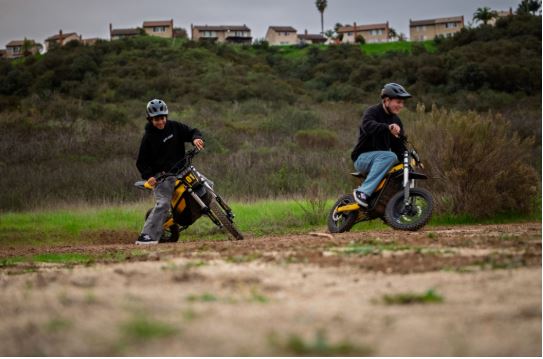
The first ride on an electric dirt bike can feel surprisingly simple. There is no engine to start, no clutch to coordinate on many models, and no exhaust note warning you that power is building. Twist the throttle and the bike responds.
That simplicity is appealing, but it can also create false confidence. An electric dirt bike is still an off-road vehicle with enough weight, torque, and speed to punish careless inputs. Beginners should treat the first few rides as skill-building sessions, not tests of maximum performance.
Begin With Fit, Not Speed
A bike that fits properly is easier to balance, steer, and stop. Before riding, check whether you can reach the controls without stretching and whether you can put at least one foot down confidently. The handlebar should not force your shoulders into an awkward position, and the brake levers should be easy to cover with one or two fingers.
Overall weight matters as much as seat height. Ask yourself whether you could lift the bike after a low-speed fall or move it through a tight garage without power. Riders comparing adult-oriented models through heybike sports or another manufacturer should look beyond motor output and consider wheel size, chassis dimensions, recommended rider weight, and total vehicle weight.
Learn the Throttle Before the Trail
Electric motors can deliver torque immediately. A small wrist movement may produce more acceleration than a beginner expects, especially in a high-power mode. Practice in the lowest available mode on a flat, open surface. Keep your wrist neutral, apply power progressively, and close the throttle before becoming tense or losing your line.
Do not grip the handlebar as if you are hanging from it. A rigid upper body makes steering less precise and can cause accidental throttle movement over bumps. Keep your elbows slightly bent, support your body with your legs, and let the bike move beneath you.
Use Both Brakes Deliberately
New riders often rely too heavily on one brake. The front brake provides substantial stopping force, while the rear brake helps settle the bike and manage speed on loose terrain. Learn how each brake feels before riding downhill.
Practice controlled stops from low speed. Apply both brakes smoothly while keeping the bike upright. Avoid grabbing the front brake suddenly on gravel or turning sharply while braking hard. As confidence improves, repeat the drill at moderate speeds and on slightly different surfaces.
Standing Is a Core Off-Road Skill
Sitting may feel natural, but standing on the foot pegs gives your arms and legs more ability to absorb terrain. Start with level ground. Keep your knees and elbows relaxed, your head up, and your weight centered. The goal is not to stand tall; it is to create room for the bike to move without throwing your body off balance.
When approaching rocks, roots, or shallow ruts, look beyond the obstacle instead of staring directly at it. The bike tends to follow your vision. A calm, forward gaze also gives you more time to adjust speed and choose a line.
Plan for Real-World Battery Use
Published range is a reference, not a promise. Soft ground, steep climbs, cold weather, rider weight, tire pressure, and repeated hard acceleration can all increase energy use. A first ride should stay close to the starting point and use a route with an easy exit.
Begin with a fully charged battery, note the displayed charge at several points, and turn back with a generous reserve. Over time, you will learn how the bike behaves on your terrain. That personal experience is more useful than assuming every mile consumes the same amount of energy.
Wear Equipment for the Ride You Could Have
A helmet is the starting point, not the entire plan. Eye protection, gloves, sturdy over-the-ankle footwear, long sleeves, long pants, and knee and elbow protection can reduce the consequences of common beginner falls. Faster or more technical riding may justify more substantial motorcycle-oriented protection.
Inspect the helmet and protective equipment before riding. Gear that is damaged, poorly fitted, or left unfastened cannot do its job properly.
Check the Bike Every Time
A short pre-ride inspection should become automatic. Check tire pressure and visible tire damage. Test both brakes. Confirm that the throttle returns freely. Look for loose fasteners, damaged cables, chain problems, fluid leaks from suspension components, or anything rubbing against a wheel.
Also verify the battery is locked in place and the charge port is closed. Off-road vibration can turn a small loose part into a larger problem.
Know Where the Bike Is Allowed
An electric dirt bike is not automatically treated like a pedal-assist bicycle. Rules vary by vehicle specifications, land manager, and location. Some models may be restricted to private property or designated off-highway vehicle areas. Quiet operation does not override trail rules.
Before transporting the bike, confirm access requirements, registration rules, required safety equipment, and whether motorized vehicles are permitted. Respect closures and other trail users.
Make the First Ride Intentionally Uneventful
A good first session may consist of starts, stops, wide turns, standing practice, and one easy loop. That is not wasted time. These basic movements become the foundation for climbing, descending, and handling loose terrain.
When reviewing an electric off-road bike, choose a model and riding mode that leave room to learn. More available power is only useful when the rider can control it. Start slowly, finish with battery and energy to spare, and build difficulty one variable at a time.
The objective of the first ride is not to discover the bike’s limit. It is to return understanding the controls, your own reactions, and the skills you need to practice next.