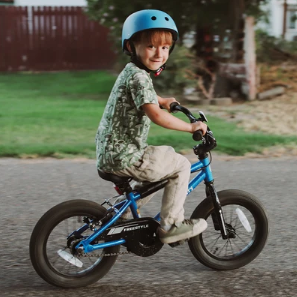
Choosing between a single-speed bicycle and a geared model can confuse parents. The right option depends on the child’s confidence, local terrain, and riding habits—not simply age or wheel size.
When comparing kids bikes, begin with fit. A lightweight bicycle that lets a child reach the ground, handlebars, and brakes comfortably is easier to control than a larger model purchased for future growth.
A single speed bike offers simple operation with no shifter to manage. That simplicity helps beginners concentrate on balancing, steering, braking, and watching their surroundings. Geared bikes add flexibility, but they also require another skill: changing gears at the right time.
What Is the Main Difference?
A single-speed kids bike has one fixed gear ratio. The child pedals harder when climbing and may spin the pedals faster when riding downhill. Because there is no gear-changing mechanism, the drivetrain has fewer parts.
A geared bike provides several resistance levels. Lower gears make it easier to pedal uphill or start on an incline, while higher gears help riders maintain speed on flat roads or gentle descents. Gears may be changed with a twist shifter or a lever near the handlebar grip.
When Does a Single-Speed Bike Make Sense?
Single-speed models often work well for first-time riders and children who mainly ride on sidewalks, playgrounds, driveways, or flat neighborhood streets. With fewer controls, a beginner can focus on essential riding skills and develop confidence.
They may also appeal to families who value easy maintenance. Fewer drivetrain components mean fewer adjustments, and there is no derailleur that can be knocked out of alignment during storage or daily use. This makes a simple bike practical for short trips and family outings.
However, simplicity does not make every single-speed model suitable. The bicycle still needs the correct frame size, appropriate brakes, manageable weight, and a gear ratio the rider can pedal comfortably.
When Are Gears Worth Choosing?
Gears become useful when a child rides on varied terrain, encounters regular hills, travels longer distances, or wants to keep up on family rides. A lower gear can reduce the effort needed for a climb, helping the rider maintain a steady rhythm instead of stopping.
A geared bicycle can also support independence. Children who ride to school, explore mixed surfaces, or join longer trips may appreciate the ability to adapt. Experienced riders often learn shifting quickly when an adult explains how to change gears before a hill rather than under heavy pedal pressure.
Still, more gears are not always better. A child who rarely shifts may gain little from the extra complexity. Before choosing a geared model, check whether the rider can operate the shifter without losing a secure grip and understands that gears should be changed one step at a time.
Consider Wheel Size and Readiness Together
Wheel size helps narrow the search, but it should not decide the drivetrain by itself. Two children riding 20-inch bikes may have different needs: one may be learning on a flat path, while the other regularly tackles hills and longer routes.
Younger riders often benefit from simple controls, yet confidence and experience matter as much as age. Some children are ready for gears earlier because they already brake, steer, and look ahead. Others will enjoy riding more if shifting is introduced later.
Compare the manufacturer’s height and inseam guidance, then confirm that the child can mount, start, stop, and turn without struggling. An appropriate fit can affect control more than the number of available gears.
Compare Weight, Maintenance, and Cost
Geared bikes include additional components, which may increase weight and require adjustment. A derailleur, shifter, and extra cables should be checked if shifting becomes noisy, delayed, or inconsistent. Single-speed designs are usually simpler to inspect and clean.
Weight matters because children must handle the bicycle, lift it over curbs, and sometimes carry it. Compare bicycle weights rather than assuming one drivetrain will always be lighter. Frame material, tires, brakes, and accessories also influence the total.
Budget should include more than the purchase price. Consider assembly, routine tune-ups, replacement parts, and how long the size is likely to fit. Paying for gears is worthwhile when the environment demands them, but extra features cannot improve a poorly fitting bicycle.
Make the Final Choice
Choose a single-speed bike when the rider is a beginner, the terrain is mostly flat, rides are short, and simple operation is the priority. Choose a geared bike when hills, distance, changing surfaces, or faster family rides make adjustable resistance useful.
Whichever style you select, prioritize fit, brakes, comfortable controls, and a helmet worn on every ride. The best kids bikes are not defined by having the most features. They are the ones children can control confidently and are excited to ride again tomorrow.