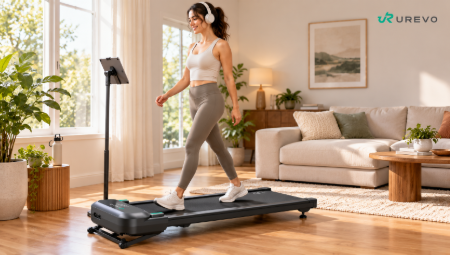
The best way to stay motivated on a walking pad is to make walking easy to start, enjoyable enough to repeat, and flexible when your energy changes. Motivation will naturally rise and fall, so a routine that depends on feeling excited every day usually does not last.
Instead of forcing yourself through the same long session, connect walking to activities you already enjoy, use smaller goals, and create a backup option for difficult days. The following seven strategies can help you reduce boredom and turn the walking pad into a regular part of your day.
1. Save Something Enjoyable for Your Walking Time
Pair your walk with entertainment you genuinely look forward to. Choose a favorite show, podcast, audiobook, playlist, or low-pressure phone call, then save it for your walking time. The walk becomes the way you access something enjoyable instead of another task competing for your attention.
Match the activity to the pace. A show or audiobook may work during a relaxed session, while upbeat music can suit a brisker walk. If you use a screen, place it near eye level so you do not spend the session looking down. Reduce the speed if the entertainment causes you to drift toward the edge of the belt
Do not force one form of entertainment to work forever. Keep a short rotation of options for different moods. Your walking pad might be your place for a comedy podcast on Monday, a favorite series on Wednesday, and music on Friday. Changing the mental experience can make the same physical movement feel less repetitive.
2. Use a Small Minimum Goal
A large daily target can make starting feel difficult. Replace “I need to walk for an hour” with a minimum goal such as ten minutes or one episode segment. You can continue if you feel good, but completing the minimum still counts as a successful session.
3. Attach Walking to a Daily Trigger
Choose an event that already happens most days and use it as the signal to walk. You might step on after your first cup of coffee, during a recurring meeting, before your evening shower, or when you begin a particular TV show. A clear trigger removes the repeated decision about when to exercise.
Make the pairing specific. “I will walk more this week” is easy to postpone. “I will walk for ten minutes after I close my laptop at 5:30” gives the habit a time and a cue. If your schedule changes often, choose two possible triggers and use whichever occurs first.
A walking pad can also turn routine work into a walking cue. Use it for tasks that do not demand precise typing, such as listening to a meeting, reviewing notes, or handling a casual call. The appropriate pace may be much slower than a dedicated workout..
4. Change the Purpose of Each Walk
Walking the same number of minutes at the same speed every day can become dull. Give different sessions different purposes. One day can be an easy recovery walk, another can use short changes in speed, and another can focus on a steady brisk effort.
A simple interval session does not need complicated programming. After an easy start, alternate two minutes at a comfortable pace with one minute at a slightly faster pace. Return to the easier speed whenever your stride feels rushed or your position on the belt becomes less stable.
If you have a walking pad with incline, changing the grade can add variety without requiring a faster belt speed. Adjust only one factor at a time so you can judge the effect. Flat walking, incline sessions, and easy recovery walks can all belong in the same week.
5. Track What You Can Control
Tracking can help when it shows progress, but it can reduce motivation when every session becomes a judgment. Focus on actions you control, such as the number of sessions completed, total walking minutes, or how often you met your minimum goal.
Use one or two measures rather than recording every number on the display. A simple calendar check mark can be enough. If you prefer more detail, record the date, duration, speed range, and a short note about how the walk felt. After a few weeks, you may notice that certain times, entertainment choices, or session lengths are easier to repeat.
6. Remove the Friction Before It Stops You
A walking pad is harder to use when it is buried under furniture, the remote is missing, or the walking area must be rearranged every time. Give the machine a practical operating or storage location. Keep the remote, supportive shoes, water, and headphones nearby.
Prepare entertainment before the belt starts. Add the podcast to your queue, open the show, or choose the playlist in advance. Searching for something while standing on the machine creates delay and can be unsafe once the belt is moving.
Maintenance also affects motivation. A dirty deck, slipping belt, unusual noise, or remote with weak batteries turns a simple session into a problem. Follow the manual’s cleaning, lubrication, belt-adjustment, runtime, and cool-down instructions. Small setup problems are easier to fix before they become reasons to stop using the machine.
7. Keep a Plan for Low-Motivation Days
Decide what counts when you do not want a normal workout. Your backup might be five easy minutes, one song, or a slow walk during a short call. The purpose is to maintain contact with the habit without pretending every day should feel the same.
Use a simple choice instead of negotiating with yourself: complete the minimum session, replace it with an outdoor walk, or take a planned recovery day. Any of those choices can be reasonable. The important part is making the decision deliberately and returning to the next scheduled session.
Accountability can also help. Share a weekly walking goal with a friend, schedule a phone walk, or send each other a check mark after finishing. Keep the system encouraging. A missed day should lead to the next available session, not a punishment workout.
If app-based variety would help you stay engaged, the UREVO SpaceWalk 5L Smart Walking Pad offers a 0.6–4.0 MPH speed range, nine levels of automatic incline up to 9%, and UREVO app content including World Tour, RhythmFit, HIIT programs, competitive mode, and check-in activities. Consider it when those features match the way you like to exercise, and confirm that its belt size, overall dimensions, and 400-pound listed capacity fit the intended user and room.
Final Thoughts
You do not need to feel highly motivated before every walking pad session. A routine becomes easier to maintain when starting takes little effort and the experience changes enough to stay interesting.
Begin with one or two strategies rather than rebuilding everything at once. Save a favorite podcast for walking, set a ten-minute minimum, and connect the session to a reliable part of your day. When the routine starts to feel stale, change the pace, purpose, entertainment, or location while keeping the habit itself intact.