
Snowmelt, pine needles, and concentrated roof runoff can reveal drainage issues well before a gutter shows any obvious signs of damage.
A gutter might look straight, clean, and normal from the sidewalk but still not work well. The first signs of trouble often show up elsewhere, like a trench in the mulch under a roof valley, splash marks on the siding, a damp area near the foundation, or a patch of ice where water keeps landing in winter.
This is why gutter problems are easy to overlook. They rarely start with a dramatic failure. Usually, the system still moves most of the water, just not enough in the spots where runoff is concentrated.
In Spokane, this difference is important. A roof drainage system might handle rain part of the year and melting snow, refreezing water, and fine tree debris at other times. The real question is not just if the gutters are still attached, but whether water is always moving safely from the roof to the right place without spilling, backing up, or pooling where it shouldn’t.
A roof drainage system needs to handle the entire path from the roof edge down to the ground, not just the gutter itself.
Overflow is not always a cleaning problem
If water pours over one spot during a storm or quick melt, debris is often the cause. Sometimes that’s true. But if the same area overflows again and again, it might be a problem with the gutter’s size or layout.
Roof valleys show this well. They gather water from two roof sections and send it to a small part of the gutter. A gutter that works fine in normal rain might have trouble when several roof areas drain to one spot. The same issue can happen if a long gutter has too few downspouts or if a downspout is blocked lower down.
For homeowners looking at gutter options, this is more helpful than just picking a system based on looks. The installer should explain how the roof size, slope, valleys, and downspout locations affect the design. A bigger gutter can help sometimes, but it only works if the water also has a clear way out.
Spokane winter changes the job at the roof edge
The National Weather Service Spokane climate normals show that snowfall is common in winter. This means roof drainage is not just a concern during rainy months. Snow can sit on the roof, melt when it warms up, and then freeze again when it gets cold.
Gutters help move water, but they do not fix ice dams. This is important because homeowners sometimes see ice at the roof edge and think the gutter is to blame.
The U.S. Department of Energy says ice dams form when heat from the attic melts snow on the roof, and the water refreezes at the colder roof edge. Air sealing, insulation, and roof ventilation help solve this problem. A gutter can handle meltwater at the edge, but it cannot fix heat loss through the roof.
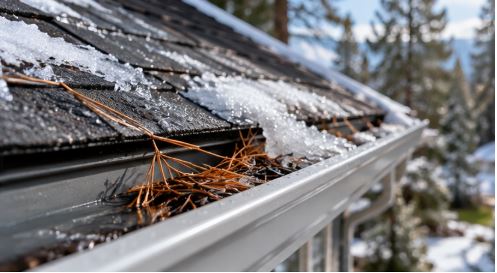
Snow, water that refreezes, and small debris can all change how water flows at the roof edge.
Pine needles create a quieter maintenance problem
Big leaves are easy to spot, but pine needles are not. Pine needles can settle in corners, gather around outlets, and mix with shingle grit or other small debris. A gutter might look clear from the ground, even as the downspout opening slowly gets blocked.
This is one reason gutter guards should be seen as a maintenance help, not a guarantee that the system will never need care. Guards can cut down on debris, but homeowners still need to watch how the system works during real storms. Water spilling over the front, standing in one spot after a storm, or always escaping at the same corner are better clues than just checking if the gutter looks clean on top.
A quick check from the ground after pine needles fall, a big storm, or the first major snowmelt can tell you more than just following a set cleaning schedule. How often you need to check depends on your property.
The downspout is where roof drainage becomes site drainage
Getting water into the gutter is just the first step. Once it reaches the downspout, you need to know where that water goes next.
The EPA’s moisture-control guidance shows downspouts moving roof water away from the foundation and stresses the importance of keeping rainwater away from the house. It’s helpful to see the whole system—roof, gutter, downspout, and discharge point—as one drainage path.
If a downspout empties next to the foundation, onto a walkway, or into a low spot near the house, it can just move the problem from the roof to the ground. Watch for erosion, washed-out mulch, splash marks, puddles that keep coming back, or soil that stays wet after the rest of the yard dries out.
A good Spokane gutter installation should plan for where the water will go before putting up new gutters. If you replace an old gutter without fixing where the water ends up, you might just have the same problem with newer materials.
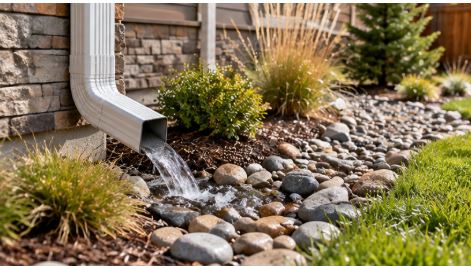
A downspout does not help much if it lets water collect next to the house.
Repair makes sense when the problem is truly local
Not every overflow or leak means you need to replace the whole system. If you have a loose hanger, damaged downspout, a leaking joint, or a small section out of pitch, you can often repair it if the rest of the system is in good shape.
It makes more sense to replace the system if the same problems keep coming back in different spots, like long sections that sag, repeated overflow at several valleys, lots of corrosion, fascia damage, or a layout that just cannot handle the roof’s needs.
The real test is how well the system works. If a repair gives you a reliable path from roof to ground, it has done its job. But if fixing one spot just moves the problem somewhere else, it’s time to look at the overall design.
A good estimate should explain the water, not just the materials
Homeowners do not need to be gutter experts before hiring someone. They just need enough information to know if an estimate is based on their actual house or just a standard package.
Useful questions include:
- Where are the highest-runoff points on this roof?
- Why is this gutter and downspout size appropriate here?
- How will water leave the downspouts and move away from the structure?
- Does any fascia need repair before new gutters are attached?
- What does the workmanship warranty cover?
Washington homeowners can also use the Department of Labor & Industries contractor verification tool to check contractor registration and related information. L&I advises consumers to verify registration, bond, and insurance rather than relying only on price or advertising.

A good installation plan should explain the gutter size, support, drainage, and where the water will go before any work starts.
The main question is simple: where does the water go?
Spokane homes do not need complicated gutter systems just because winters are cold. They need drainage that fits the roof and the property.
Pay attention during real weather. See where water collects, where debris builds up, where downspouts release water, and if the same trouble spots come back each season. These observations often tell you more than just knowing how old the gutters are.
A system that quietly moves water from the roof and lets it out in the right place is easy to forget about. That is exactly how it should work.
Primary sources used
- National Weather Service Spokane – Climate Normals
- U.S. Department of Energy – Eaves Sealed in Cold Climates
- U.S. Environmental Protection Agency – Moisture Control Guidance for Building Design, Construction and Maintenance
- Washington State Department of Labor & Industries – Verify a Contractor, Tradesperson or Business