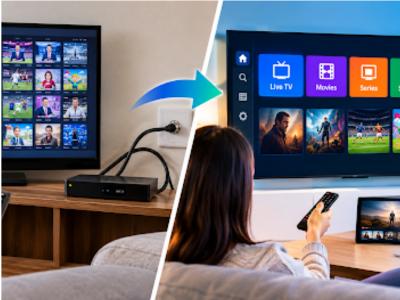
Cable television and internet-based television represent different approaches to delivering entertainment. Cable traditionally uses a provider’s physical network, while IPTV uses an internet connection. For viewers considering a switch, the important question is not whether one technology is universally better. It is whether the complete service fits the household’s content needs, internet quality, equipment, budget, and preferred way of watching television.
Understand the Delivery Models
Cable generally provides television through infrastructure managed by the cable provider, while IPTV relies on internet connectivity. From the viewer’s perspective, both can provide live channels and other programming. The difference becomes more noticeable when considering portability, device choices, network dependence, and installation.
Compare Total Cost
Cost should be compared as a complete package rather than by headline price. Cable may involve equipment rental, installation, premium channels, or bundled services. Internet-based television may have a different subscription structure, but viewers should also consider the cost of broadband if it is not already part of the household budget.
Check Content and Availability
Before switching, list essential channels, sports competitions, movies, and other programs. Content rights vary by region and provider. A service that looks attractive in a general comparison may not include the specific programming that matters most to an individual household.
Consider Quality and Network Dependence
Quality depends on the delivery system and the home environment. Cable performance is tied to the provider’s network, while IPTV performance depends heavily on the internet connection, router, Wi-Fi, and streaming device. A stable connection can support excellent streaming, but congestion or weak wireless coverage can reduce performance.
Look at Device Flexibility
Internet-based television can fit naturally into a multi-device home when supported. Viewers may value the ability to use a television, streaming box, computer, tablet, or phone. Cable may remain attractive to households that prefer a traditional managed package with familiar equipment and support.
Review Regional Options
Regional comparison is important. A viewer researching a best IPTV USA subscription, best IPTV provider Australia, or best IPTV service Canada should check current availability, features, pricing, device support, and terms rather than relying on generic descriptions. The practical value of a service can change from one country or market to another.
Choose Based on Household Needs
The best choice depends on the household. Cable can be convenient where its network and channel lineup are strong. IPTV can appeal to viewers who value internet-based flexibility and device choice. The smartest decision comes from comparing actual viewing habits, network conditions, total cost, and desired content.
A strong viewing experience is ultimately about balance. Content should match the household’s interests, the service should work with the devices already in use, and the network should be capable of supporting the intended quality. Pricing and account terms should also be understood before a longer commitment is made. When viewers compare these factors together, they can make a decision based on practical value rather than a single headline feature.
Before relying on a service for an important event, it is sensible to test it under normal conditions. Try the preferred channels or programs, use the intended television or streaming device, and observe performance during ordinary household activity. This simple approach can reveal compatibility or network issues early and gives viewers a much clearer idea of what to expect.
Viewers should also remember that internet performance can change. Household usage, router placement, software updates, and network conditions may change over time. A setup that works perfectly today should still be reviewed periodically, especially before an important live event or a long-term subscription renewal.
Finally, viewers should separate marketing promises from real-world performance. The most useful evidence comes from testing the service on the actual connection and devices that will be used every day. A short, careful evaluation can prevent a much longer period of frustration.
Another practical consideration is support. Viewers should know how to reach the provider if activation, billing, device compatibility, or playback questions arise. Clear support information can add significant value because even well-designed home systems occasionally require troubleshooting.
Accessibility also matters. Readable menus, responsive controls, clear audio, subtitles where available, and straightforward navigation can make technology easier for the entire household. A service should reduce friction rather than make viewers repeatedly search for basic functions.
Viewers should also remember that internet performance can change. Household usage, router placement, software updates, and network conditions may change over time. A setup that works perfectly today should still be reviewed periodically, especially before an important live event or a long-term subscription renewal.
Finally, viewers should separate marketing promises from real-world performance. The most useful evidence comes from testing the service on the actual connection and devices that will be used every day. A short, careful evaluation can prevent a much longer period of frustration.
Another practical consideration is support. Viewers should know how to reach the provider if activation, billing, device compatibility, or playback questions arise. Clear support information can add significant value because even well-designed home systems occasionally require troubleshooting.
Accessibility also matters. Readable menus, responsive controls, clear audio, subtitles where available, and straightforward navigation can make technology easier for the entire household. A service should reduce friction rather than make viewers repeatedly search for basic functions.
Viewers should also remember that internet performance can change. Household usage, router placement, software updates, and network conditions may change over time. A setup that works perfectly today should still be reviewed periodically, especially before an important live event or a long-term subscription renewal.
Finally, viewers should separate marketing promises from real-world performance. The most useful evidence comes from testing the service on the actual connection and devices that will be used every day. A short, careful evaluation can prevent a much longer period of frustration.