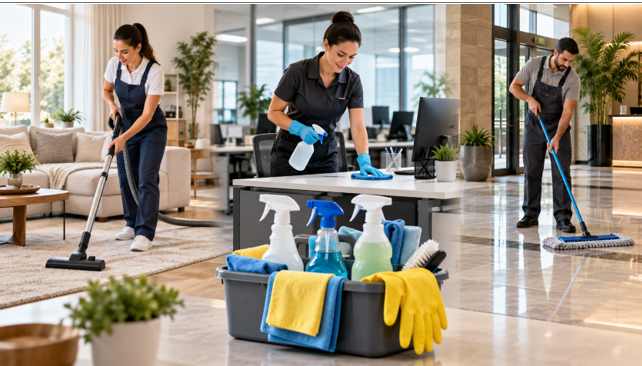
Office cleaning proposals can look similar even when the actual service differs considerably. One estimate may include supplies and periodic detail, while another covers only basic labour. The safest comparison begins with a shared scope.
Before requesting estimates, write down the rooms, tasks, frequencies, service windows, and quality expectations. Give each provider the same information, including occupancy patterns, floor types, washroom count, kitchen use, and access restrictions.
When reviewing office cleaning companies in Calgary, managers should ask each candidate to explain assumptions. A low price based on fewer hours, excluded tasks, or limited supervision does not mean a fuller program.
Build a clear scope
A useful scope separates routine work from periodic work. Routine tasks may include waste, washrooms, accessible surfaces, kitchens, vacuuming, and mopping. Periodic work may include high dusting, carpet extraction, interior glass, and detailed edges.
The document should identify who supplies liners, paper products, soap, chemicals, and equipment. It should also clarify whether the provider monitors stock or simply uses items made available on site.
Do not assume that phrases such as full service or deep clean have a universal meaning. Ask for named tasks and frequencies so both parties can judge completion against the same standard.
Examine the staffing model
Ask who will perform the work, how team members are trained, and what happens during absence or turnover. A dependable provider needs enough coverage to maintain the schedule without sending unprepared replacements.
Continuity can improve efficiency because familiar cleaners understand access, room priorities, and office routines. When changes are necessary, site notes and supervision should help the next team maintain the agreed standard.
Screening, identification, key control, and confidentiality procedures matter in offices where cleaners work around documents, devices, and restricted areas. The process should be clear before access is granted.
Check safety and insurance
Cleaning involves wet floors, electrical equipment, chemicals, ladders, and after-hours access. Ask how the provider manages product labels, safety information, equipment condition, spill signs, and incident reporting.
Confirm that the business holds appropriate insurance for its operations. The exact coverage needed depends on the property and contract, but a provider should be able to explain its protection and provide evidence when requested.
Special environments may require additional training or exclusions. If the office includes clinical rooms, workshops, server areas, or other sensitive spaces, identify those conditions before accepting a standard proposal.
Evaluate quality control
Quality control should be more than waiting for complaints. Ask whether the provider uses supervisor checks, room inspections, digital records, client reviews, or another repeatable method to confirm completion.
Useful evaluation questions include:
- Who receives and responds to a service concern?
- How quickly are missed tasks normally corrected?
- How are recurring problems investigated?
- When is the scope formally reviewed?
The answer does not need to involve complicated software. A simple system can work well if responsibility, response time, and follow-through are clear.
Review communication
A good Calgary office cleaning arrangement requires a practical communication path. Site contacts should know where to report an issue, and cleaning teams should know whom to call about access, alarms, damage, spills, or unusual conditions.
During the proposal stage, notice whether the provider answers questions directly and records property details accurately. Communication before the contract often predicts how the provider will handle changes and concerns afterward.
Ask how special requests are approved and priced. Events, construction dust, additional rooms, and schedule changes can add work. A clear change process prevents surprise invoices and protects the normal service plan.
Use references carefully
Reviews and references are valuable when they describe work similar to the office being quoted. Look for comments about reliability, consistency, communication, and response to problems rather than only broad praise.
A site with comparable size, hours, or security needs provides more relevant evidence than an unrelated property. If references are available, ask what the provider does well and how it responds when standards slip.
A trial period can also reveal fit. Define what will be measured, document the starting condition, and schedule a review. The trial should test the real scope rather than an unusually intensive first visit.
Read the contract closely
Before signing, compare the contract with the proposal and scope. Confirm the start date, term, renewal language, cancellation process, payment timing, taxes, price adjustments, and any minimum service commitment.
Attach or clearly reference service schedules. If important tasks appear only in an email or sales conversation, add them to the written agreement so they remain visible after staff or contacts change.
Review responsibility for damage, lost access items, alarm calls, consumable supplies, and secure storage. The contract should also explain how either party reports an incident and who must be notified outside normal hours.
Be Attentive
Pay attention to exclusions. Hazardous materials, pest waste, sharps, heavy lifting, exterior work, elevated areas, and post-construction debris may require separate arrangements. Clear exclusions protect safety and prevent surprise disputes.
Finally, confirm how the service can scale. A good agreement provides a way to add space, change frequency, or cover events without forcing both sides to renegotiate every operational detail.
Request a final version that combines all negotiated changes before approval. A clean contract package should let a new manager understand the service without reconstructing decisions from scattered messages. That clarity protects continuity when contacts, supervisors, or cleaning personnel change during the agreement.
It also makes later performance reviews fairer because the provider and client can return to one authoritative description of tasks, frequencies, service windows, prices, and correction responsibilities.
Conclusion
Comparing office cleaning providers becomes easier when every proposal responds to the same detailed scope. Price then sits beside staffing, safety, access, quality control, communication, and the ability to manage change.
The goal is not to find the longest checklist. It is to choose a provider whose systems can produce a consistent result with minimal disruption. Clear expectations at the start create a stronger and more accountable working relationship.