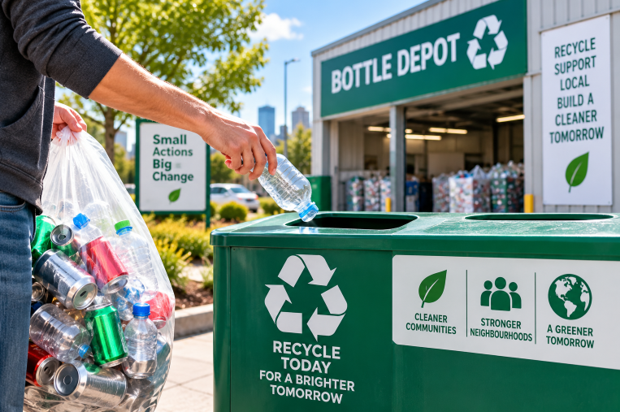
Businesses and organizations that serve beverages can accumulate large quantities of empty bottles, cans, cartons, and other containers. Restaurants, hotels, offices, schools, healthcare facilities, and event venues may generate enough material that transporting it personally becomes inconvenient.
Commercial bottle pickup can provide a practical solution for organizations dealing with larger volumes of refundable beverage containers.
When Bottle Pickup Makes Sense
A “bottle depot Calgary” search may be useful for individuals with a few bags of containers, but businesses with significant volumes may face different challenges.
Employees may need to collect, store, load, and transport containers during working hours. Large quantities can also take up valuable storage space.
A scheduled pickup arrangement can reduce the need for repeated individual trips and create a more organized recycling routine.
Which Organizations Can Benefit?
Commercial bottle pickup can be useful for many types of organizations.
Examples include:
· Restaurants and hotels
· Bars and pubs
· Golf courses
· Offices
· Schools and colleges
· Hospitals and care facilities
· Event venues
· Community organizations
The amount of recyclable material generated and the organization’s location can influence whether a pickup arrangement is appropriate.
Setting Up a Collection Area
An organized collection area makes bottle pickup much easier.
Businesses should designate a location where staff can place refundable beverage containers after use. The area should be easy to access but should not interfere with regular operations.
Containers should remain separate from ordinary garbage.
Clear signage can help employees understand which materials belong in the collection area and which items should go into other recycling or waste streams.
Preparing Containers for Pickup
Containers should be empty and recognizable before collection.
Where appropriate, sticky containers can be rinsed to reduce residue and odours.
Labels should generally remain attached because they can help identify eligible beverage containers.
Businesses should also keep food waste, coffee cups, household packaging, and unrelated recyclable materials out of the bottle collection.
Glass should be handled carefully and stored in a way that minimizes the risk of breakage.
Planning the Collection Schedule
The ideal pickup frequency depends on how quickly containers accumulate.
A restaurant with high beverage sales may need a different schedule from a small office.
Before arranging collection, organizations should estimate:
· Number of bags or bins produced
· Types of containers collected
· Available storage space
· Preferred pickup times
· Loading-area access
· Frequency of accumulation
Providing accurate information helps determine whether the collection can be accommodated efficiently.
Access and Loading Requirements
Pickup logistics should be considered before the scheduled collection.
The organization should identify where the collection vehicle can park and how containers will be moved from storage to the loading area.
If the property has gates, loading docks, underground parking, elevators, narrow access routes, or restricted receiving hours, these details should be communicated in advance.
A designated contact person can also help coordinate the collection when the driver arrives.
One-Time Versus Ongoing Pickup
Not every organization needs regular pickup.
A one-time collection may be appropriate after:
· A large event
· A seasonal campaign
· An office cleanout
· A community fundraiser
· A particularly busy period
Other organizations generate refundable containers continuously and may benefit from discussing a recurring arrangement.
The appropriate frequency should be based on actual container volume rather than an arbitrary schedule.
Keeping Recycling Separate From Garbage
One of the simplest ways to improve workplace recycling is to separate refundable beverage containers as soon as they are discarded.
When bottles and cans are mixed with food waste or general garbage, recovering them becomes more difficult.
Separate collection also makes it easier for staff to understand the organization’s recycling process.
Businesses can support participation by placing clearly labelled containers in kitchens, break rooms, cafeterias, event spaces, and other areas where beverages are commonly consumed.
Finding a Suitable Collection Solution
A Calgary bottle exchange can be useful for businesses that prefer to transport smaller collections themselves. For organizations producing larger volumes, however, pickup can reduce staff time and transportation demands.
The right approach depends on container volume, available storage, staffing, and access requirements.
Final Thoughts
Commercial bottle pickup can simplify recycling for organizations that generate significant quantities of refundable beverage containers. Establishing a dedicated collection area, separating containers from garbage, preparing materials properly, and communicating access details can make the process more efficient.
For businesses, the goal is not simply to remove empty bottles. A well-planned collection system can reduce workplace clutter, support responsible recycling, and make beverage-container management part of normal operations.