Regular vehicle washing is an important part of exterior maintenance. Everyday driving exposes cars and trucks to dust, mud, road salt, insects and other contaminants that can gradually build up on painted surfaces.
Using the right washing approach can make cleaning more effective while reducing unnecessary physical contact with the vehicle. Understanding how different methods work can help drivers choose an option that suits their vehicle and driving conditions.
Why Proper Washing Technique Matters
Dirt is not always harmless simply because it is sitting on the surface of a vehicle. Road grime can contain small particles of grit and other abrasive materials.
Aggressively rubbing these contaminants against painted surfaces may create fine marks over time. This is why loosening dirt before attempting to remove it is an important part of responsible vehicle washing.
A proper wash should focus on removing contamination rather than simply moving it around the surface.
How Touchless Washing Works
Touchless washing uses cleaning solutions and pressurized water instead of brushes or other equipment that physically contacts the vehicle.
The cleaning solution helps loosen road film and other contaminants, while pressurized water removes the loosened material from the exterior.
For drivers looking for a convenient routine-cleaning option, a touchless car wash Calgary service can reduce the need for manual scrubbing.
Touchless washing can be particularly practical for vehicles with ordinary road dust, light mud and seasonal grime. However, heavily soiled areas may still require additional attention.
Start With the Most Contaminated Areas
Certain sections of a vehicle naturally collect more road debris than others. Lower doors, wheel arches, bumpers and the rear of the vehicle are frequently exposed to road spray.
These areas should receive appropriate attention during the washing process.
Winter driving can make this even more important because salt and slush can accumulate along lower panels and around wheel wells.
Using Pressure Responsibly
High-pressure water can be effective for loosening and removing dirt, but it should be used carefully.
Avoid placing the nozzle unnecessarily close to painted surfaces, weather seals, trim or areas with existing damage. Maintaining an appropriate distance allows the water to work effectively without applying excessive pressure to sensitive components.
When washing manually, it is also better to allow cleaning solutions and water to loosen contamination before attempting additional cleaning.
When a Self-Serve Wash May Be Useful
Automatic washing is not always the best option for every situation. Some vehicles may have specific areas that need more attention than a standard cycle provides.
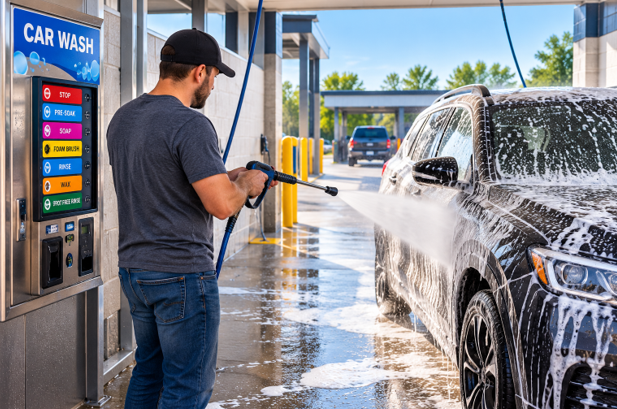
A self-wash car wash Calgary facility allows drivers to control the cleaning process themselves. This can be helpful when dealing with mud around wheel arches, dirt on lower panels or other concentrated areas of contamination.
Self-serve washing does require more time and involvement, but it provides greater control over where and how the vehicle is cleaned.
Don’t Forget the Wheels and Undercarriage
Wheels and lower vehicle areas often collect significant amounts of dirt. Brake dust, mud, salt and road debris can accumulate in these locations.
During winter, an appropriate underbody rinse can help remove road residue from areas that are difficult to see. Drivers should still follow the washing facility’s instructions and avoid directing excessive pressure towards sensitive mechanical components.
Consider Seasonal Driving Conditions
The right washing routine can change throughout the year.
Winter may require more frequent washing because of road salt and slush. Spring can bring mud and grit, while summer introduces insects, pollen and dust. Autumn may add leaves and moisture to the mix.
Instead of following a rigid washing schedule, drivers should consider how much exposure their vehicle receives and clean it when noticeable buildup occurs.
Build a Consistent Vehicle-Care Routine
A vehicle does not need intensive cleaning every time it is washed. Consistent removal of ordinary road contamination can make maintenance easier and reduce the amount of heavy cleaning required later.
Drivers should also inspect their vehicles periodically for damaged paint, loose trim, worn seals or other issues that may need attention.
Final Thoughts
Effective vehicle washing is largely about using the right technique rather than relying on excessive scrubbing. Loosening dirt first, using pressure appropriately and paying attention to heavily contaminated areas can make the cleaning process more efficient.
Touchless washing provides a convenient option for routine exterior maintenance, while self-serve washing gives drivers greater control when specific areas require additional attention. By adapting the washing method to the vehicle’s condition and seasonal driving environment, owners can keep their vehicles cleaner while making regular maintenance more manageable.